An internal recruiting tool, redesigned to cut manual work for the marketing team.
My role: Lead Designer
Team: Product Manager, TalentStack Development Team, Platform Team (CIE), Lead Designer (me)
Background
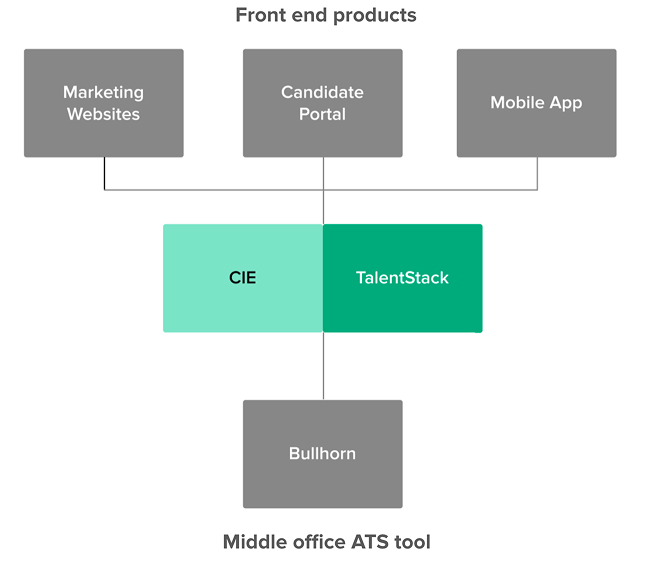
Connects the portal, marketing sites, and mobile app to Bullhorn (the ATS) via CIE (Candidate Information Exchange), a middleware layer.
Used by recruiters, credentialing, and marketing teams to manage candidates across 5 brands (Ingenovis Health, Trustaff, Fastaff, USN, Springboard)
A diagram illustrates the interrelation between the TalentStack and CIE platform’s candidate experience products and the middleware ATS tool.
The Problems
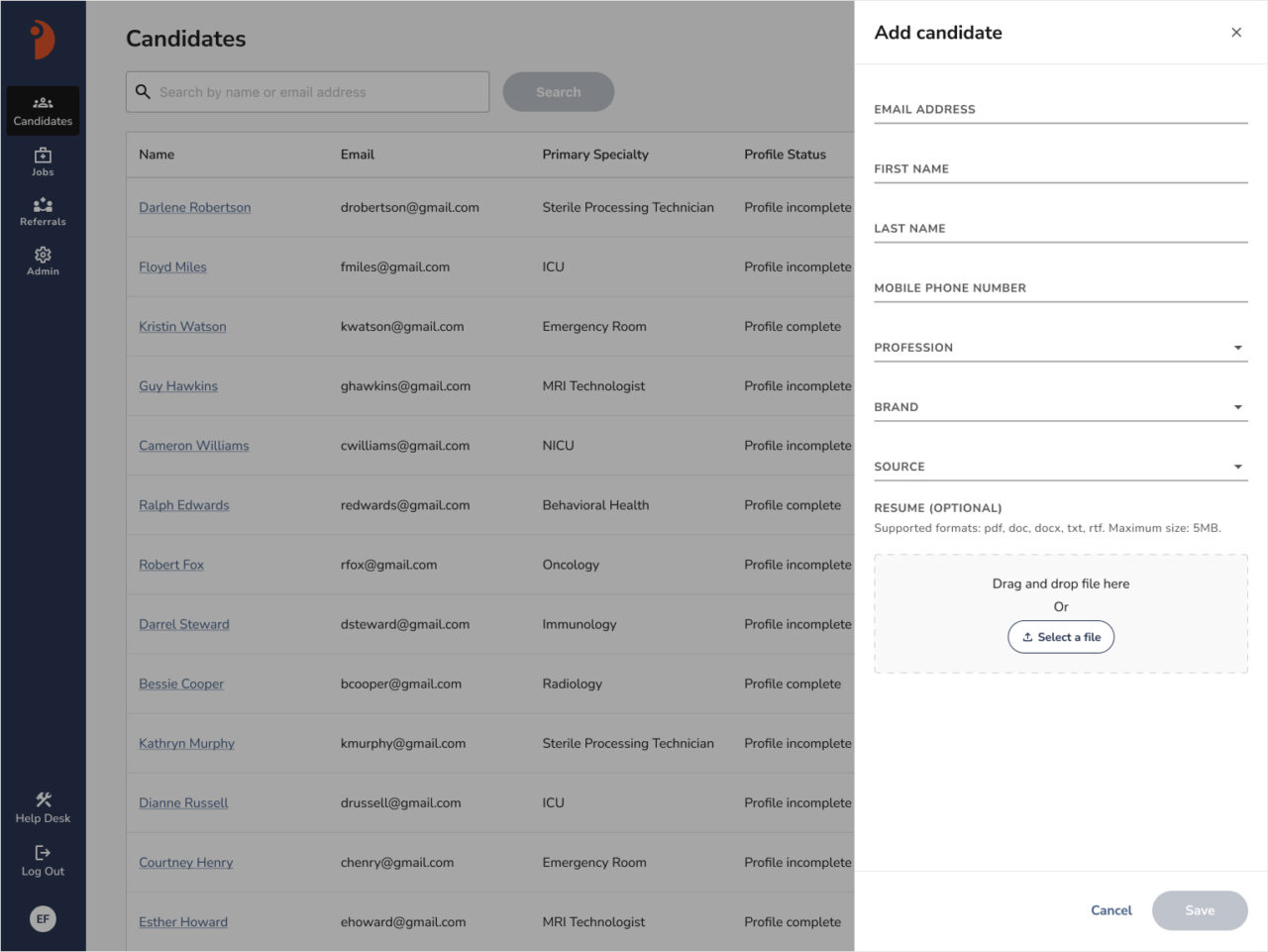
The marketing team manually added candidate data from third-party job sites, like Indeed, one entry at a time — a slow, repetitive process prone to errors and duplicates.
The Solution
I designed a bulk candidate upload feature for TalentStack, cutting manual entry down to a single import.
Timeline: End of 2024
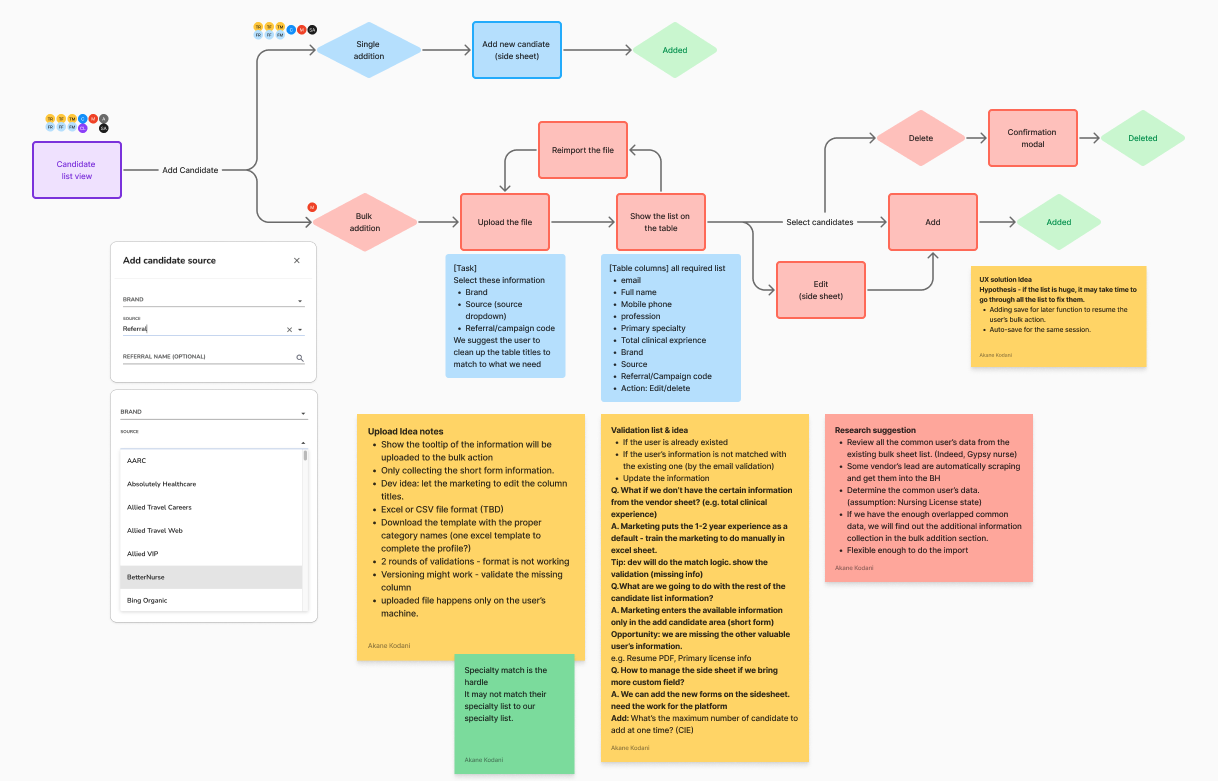
Discovery Workshop
I ran a workshop to map the current process and find where the pain was.
Two patterns stood out:
When a candidate applied on a job site, marketing retyped their info from a lead email by hand.
Vendors also sent weekly spreadsheets of leads, entered one by one, with no consistent format.
Design Iterations
Upload
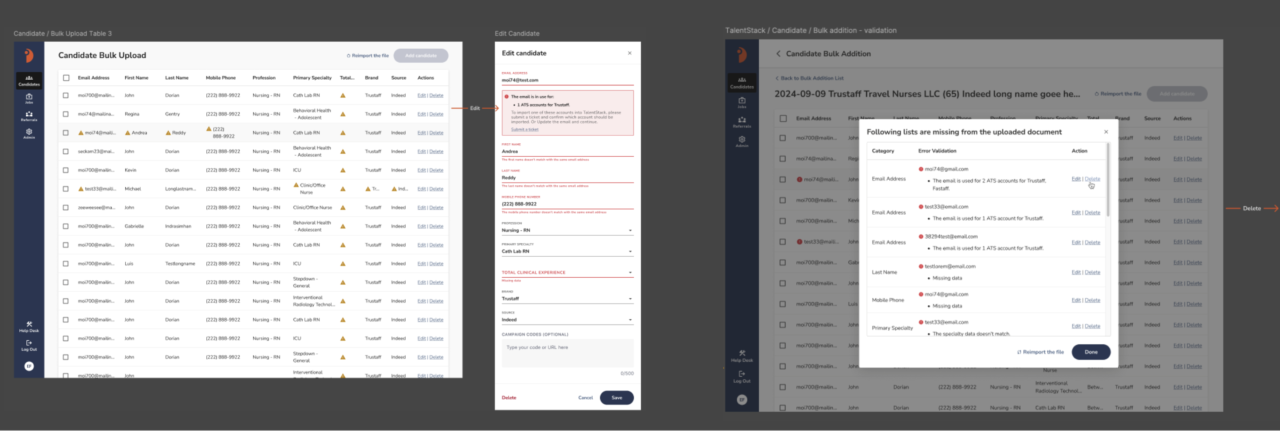
Earlier version: users upload a CSV, then review every valid and invalid row, before confirming.
Feedback: reviewing already-valid data felt redundant.
Edit
First version: opened edits in a side-sheet drawer, to stay consistent with the rest of TalentStack.
Feedback: a separate editing step added friction.
Iteration: flag errors in a modal and import valid rows automatically.
Feedback: Simplify the process to prevent the number of errors.
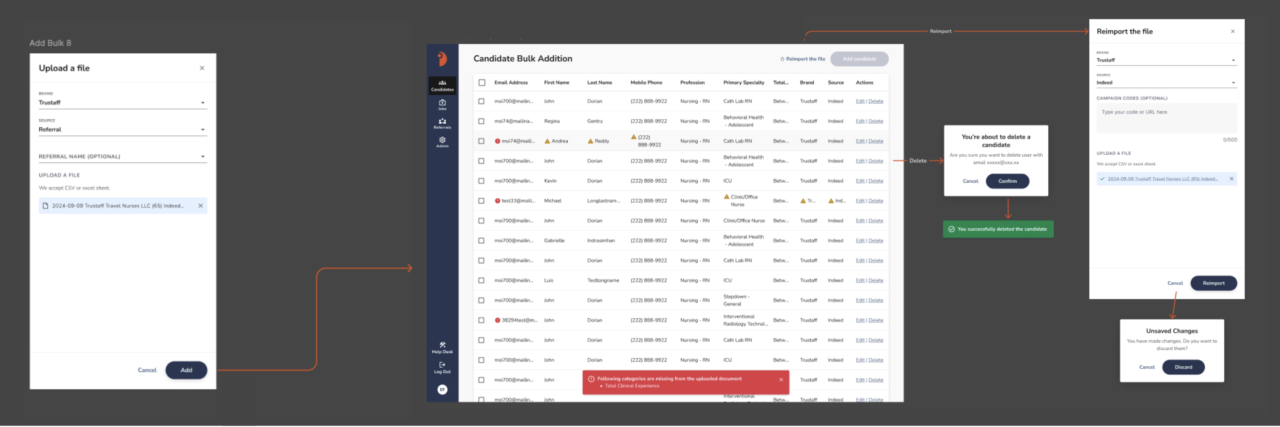
Final Design
A CSV template and instructions upfront, to prevent errors before they happen
Formatting errors flagged immediately, requiring a re-upload
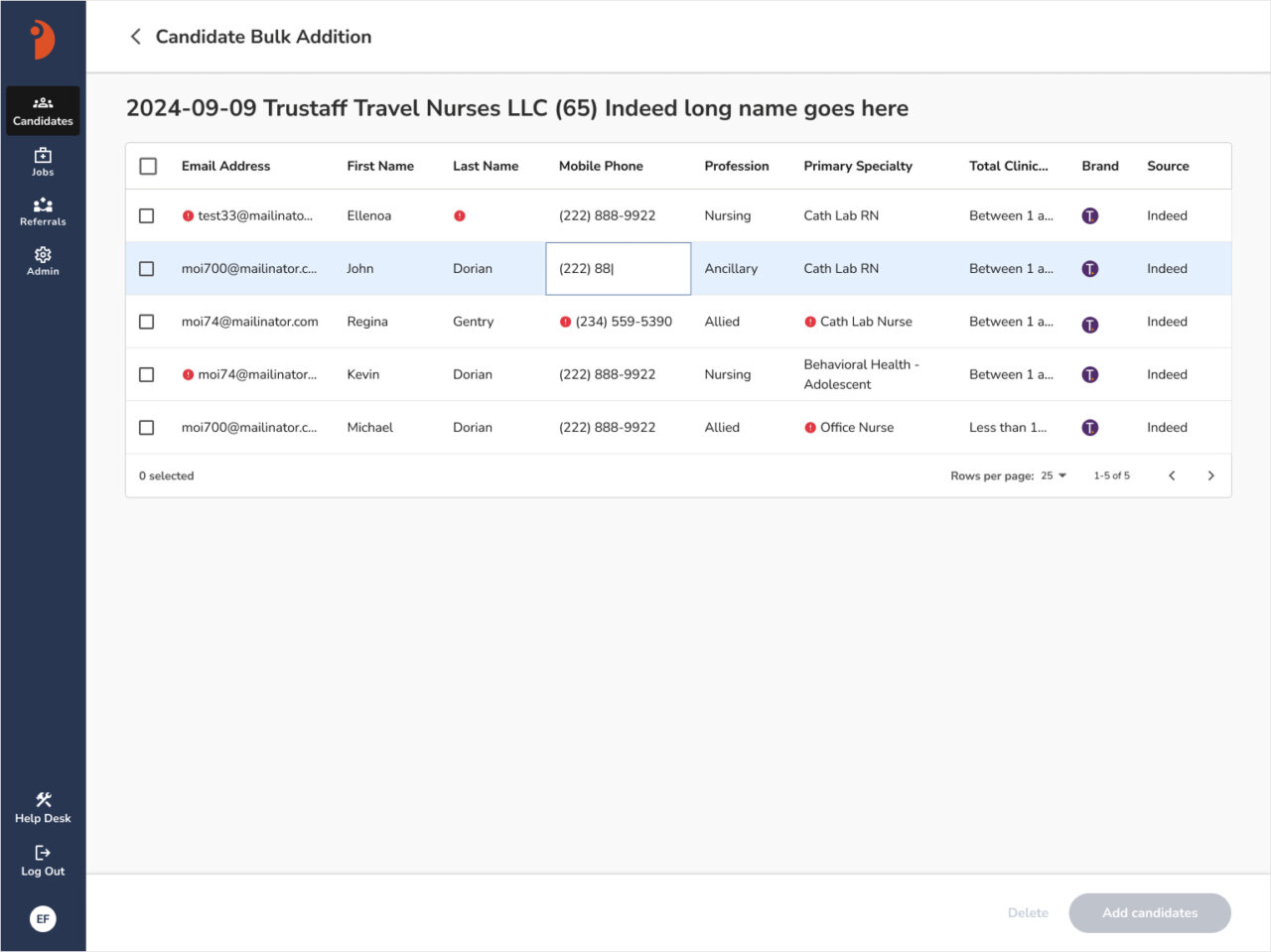
Valid candidate rows added automatically — no manual review needed
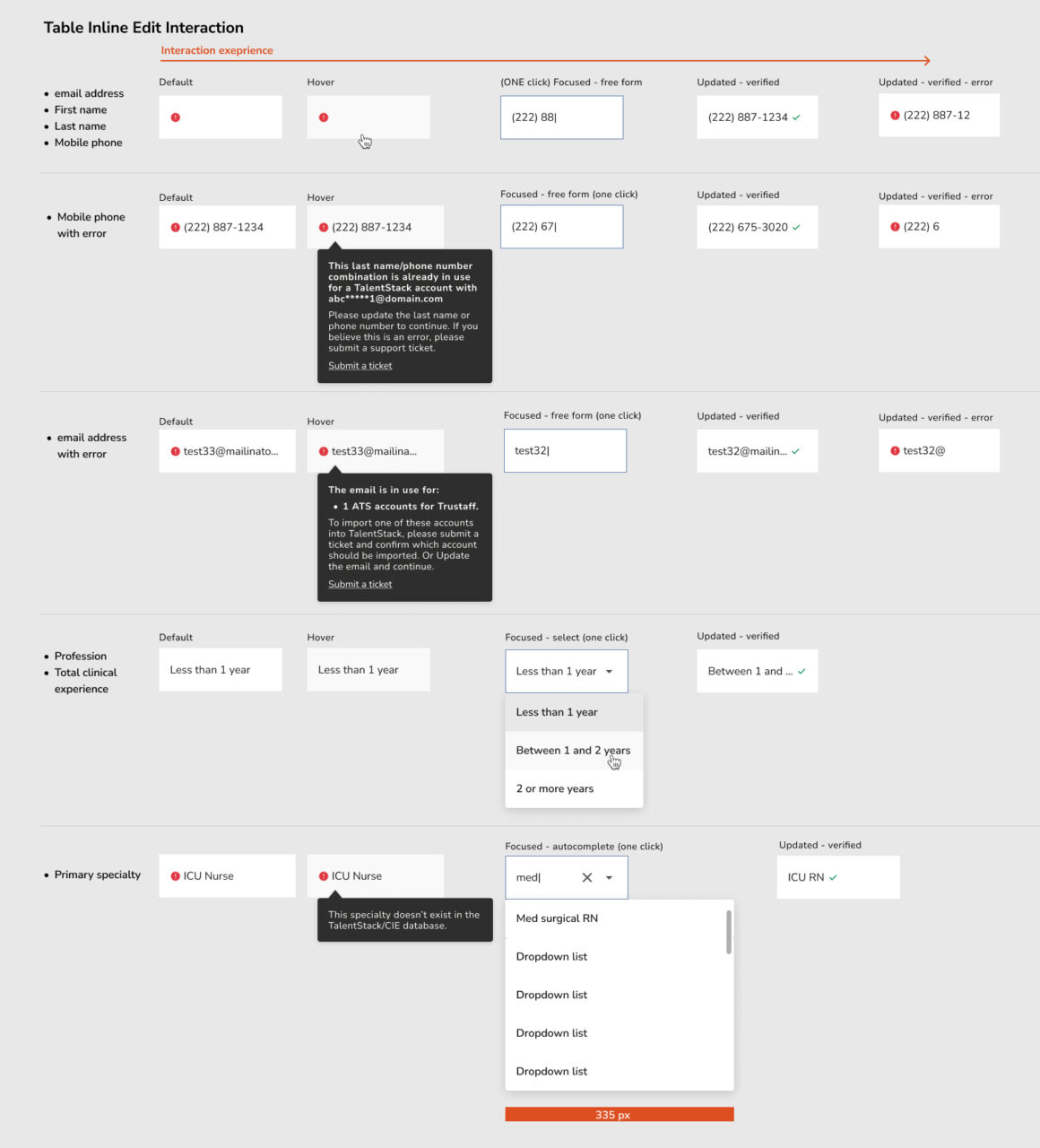
Only error rows shown, with inline editing and autocomplete to fix them quickly
Results
71 hours saved from recruiters’ work in the first 4 days after launch.